
Haapsalu shawl care: how to keep a shawl soft and beautiful for years
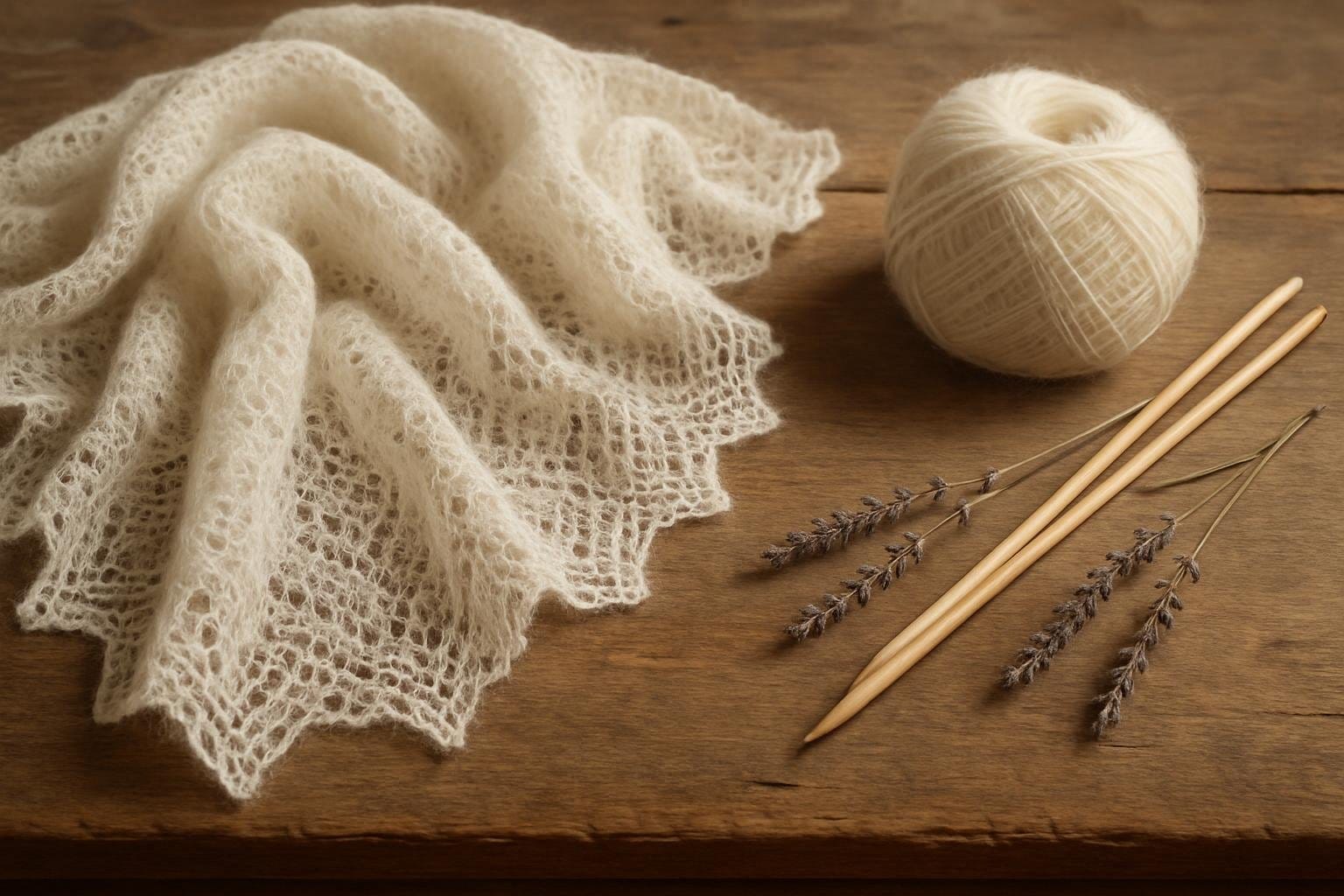
Caring for a Haapsalu shawl is simpler than it first appears. A hand-knitted lace shawl does not need frequent washing, it needs the right wash and the right storage. Those two things decide whether a shawl stays soft and beautiful for decades or felts up at the very first wash. Wool fibre has properties that make care easy, but some mistakes cannot be undone, so it is worth knowing them before the first wash.
The knitting of Haapsalu shawls and scarves is inscribed in the Estonian list of intangible cultural heritage, and every shawl holds hours and days of the knitter's work. That is why care deserves the same attention as the knitting itself. Below we go step by step through how to wash, dry, block and store a woollen lace shawl, and what to do about small pulls and holes.
How often a shawl needs washing
Wool fibre naturally repels both dirt and odour. This means a Haapsalu shawl needs washing far less often than a cotton or synthetic item. In most cases it is enough to hang the shawl in damp air for a few hours, for example in the bathroom after a shower or outdoors on a misty day. The fibre freshens itself and odours disappear. If the shawl picks up a stain, deal with it on the spot using lukewarm water and a drop of wool wash, without wetting the whole shawl.
Every wash puts strain on wool, because wool felts through the combined effect of three factors: hot water, a sudden change in temperature and mechanical rubbing. Felted lace cannot be brought back, so every wash you avoid extends the life of the shawl. In practice this means a shawl in daily use needs a thorough wash only a couple of times a season, and a shawl kept in the wardrobe even less often.
Three common misconceptions that ruin shawls:
- A woollen shawl must be washed often. In fact, airing is usually enough, and stains are best treated on the spot.
- The wool programme on a washing machine is always safe. Drum movement and spinning can shrink hand-knitted lace even at a low temperature.
- Fabric conditioner makes a shawl softer. In reality, conditioner coats the wool fibre with a film and takes away its breathability and natural loft.
Hand washing step by step
Hand washing is the safe choice for hand-knitted lace. You will need a basin or a clean sink, lukewarm water and a suitable wash product. The whole job takes only a quarter of an hour, as most of shawl care is simply waiting for it to dry. Check the shawl over before washing. Loose stitches and pulls are best secured before water and handling stretch them further.
Water and wash product
The water should be lukewarm, roughly hand warm. The rinsing water must be at exactly the same temperature as the wash water. Use a wool wash or a product containing lanolin, which feeds the fibre as you wash. Ordinary washing powder and bleach are far too alkaline for wool and leave the fibre coarse. The same applies to fine merino wool more generally. The yarns in our shop are Italian merino wool, and items knitted from them need exactly the same gentle washing.
The wash itself goes like this:
- Let the shawl sink into the wash water and move it gently, without rubbing or kneading.
- A few minutes of soaking is enough, a lace shawl does not need a long wash.
- When rinsing, the water must be as warm as the wash water, because a sudden change in temperature makes the fibre felt.
- Never wring the shawl. Squeeze the water out gently, then roll the shawl in a towel, which draws out the excess moisture.
After rolling in a towel the shawl is damp enough for blocking, and the next stage can begin straight away.
Drying and blocking
A merino woollen shawl is always dried flat. After rolling it in a towel, lay the shawl out on a flat, soft surface such as a carpet or a foam mat covered with clean linen. Drying it hanging up stretches the shawl out under its own weight and distorts the shape, and that is hard to put right later.
Blocking brings out the pattern
The lace pattern of a Haapsalu shawl only shows at its best once it has been stretched, in other words blocked. The wet shawl is stretched to the correct measurements and the pattern is opened out. Traditionally the edges are pinned to a soft surface. This way the pointed edges regain their shape and lace that has collapsed becomes airy again. Blocking pins can be ordinary stainless pins, the only thing that matters is that they leave no marks on wet wool. All the Haapsalu shawls in our shop are blocked in this way before they reach the shelf.
A good drying spot is room temperature, shaded and level. Direct sunlight and radiator heat leave wool dry and speed up fading. Drying takes anything from a few hours to a full day depending on the size of the shawl and the humidity of the room, and it is worth giving it that time. Folding a half-damp shawl leaves creases that are difficult to remove later.
Storage and small repairs
How you store a shawl in the wardrobe matters as much as how you wash it. Keep it folded and flat on a shelf or in a drawer. A hanger leaves stretch marks in fine lace that will never settle back on their own. The storage space should be dry, clean and closed, as moths take a particular interest in animal fibres. A block of cedar wood or a lavender bag is a common natural deterrent worth placing on the shelf beside the shawl. Before longer storage, in spring for example, air the shawl thoroughly, because moths prefer fibre carrying skin oils and traces of scent. A couple of times a year it is worth checking over and airing the woollen items in your wardrobe. That way any damage is spotted early.
Small faults do not call for a specialist straight away:
- A small pull can usually be eased back into the fabric with a crochet hook, working gently and in the direction of the stitch.
- A broken stitch should be secured immediately, before it runs further. A fine yarn in the same shade and a couple of securing stitches will do.
- Repairing a moth hole calls for darning skills and matching yarn, so this is best taken to an experienced knitter.
Knitting something yourself helps you understand how a shawl is built. Our do it yourself kits include the yarn and the pattern, and once you have finished your first piece, repair work makes a great deal more sense.
If you have questions about care, or would like a finished shawl, you are always welcome to write to us. To order, simply send a message with the code of the product you want. Our details are on the contact page.